#Xarray

6 posts

Our compute roadmap: introducing Zax SQL

Our compute roadmap: introducing Zax SQL

We're introducing Zax, a new query and compute engine for multidimensional scientific data, and Zax-SQL, the first interface to it. Zax plans your computation for you, so you are no longer responsible for tuning chunk sizes, worker counts, and memory limits.

Ryan Abernathey
Ryan Abernathey

CEO & Co-founder

Brian Davis
Brian Davis

Head of Product

Joe Hamman
Joe Hamman

CTO & Co-founder

Deepak Cherian
Deepak Cherian

Principal Research Engineer

Sebastian Galkin
Sebastian Galkin

Head of Engineering
Xarray for Biology

Xarray for Biology

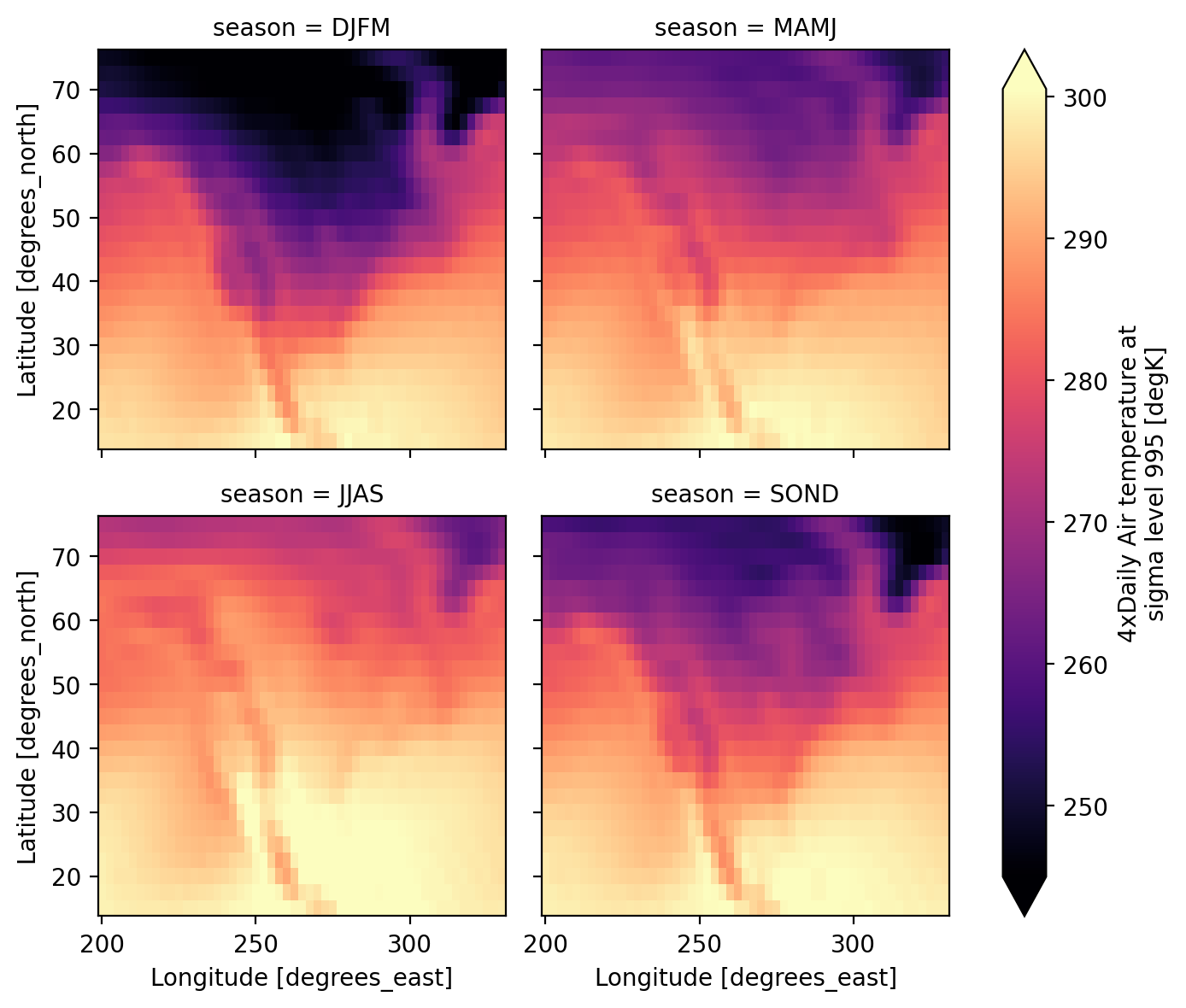
Xarray's labeled, multidimensional data structures can solve common pain points in biological data analysis, from tracking microscopy metadata to managing complex genomic datasets. Adoption has been limited by awareness, technical rough edges, and lack of tool integration, but the community is actively working to change that.

Ian Hunt-Isaak
Ian Hunt-Isaak

Xarray Community Developer

Icechunk: Efficient storage of versioned array data

Icechunk: Efficient storage of versioned array data

Icechunk stores versioned array data efficiently by never copying or rewriting existing chunks, so each new version only consumes storage for the data that actually changed. Older versions can be expired and garbage-collected when they are no longer needed.

Sebastian Galkin
Sebastian Galkin

Head of Engineering

Vector data cubes in Xarray

Vector data cubes in Xarray

Vector data cubes extend the familiar raster data cube concept to geospatial vector data, using arrays indexed by geometries instead of gridded coordinates. The Xvec package brings this capability to Xarray, enabling powerful multidimensional analysis of point, line, and polygon data.

Emma Marshall
Emma Marshall

Software Engineer